What Makes Diaporos Island Special in Halkidiki
Diaporos sits just off the Sithonia peninsula, separated from the mainland by a shallow channel narrow enough that you can almost shout across it. That geography is the whole story. Because the island has no permanent road access and no bridge, the beaches stay quiet in a way that shore-side spots in Halkidiki rarely manage, even in August.
The island is not large. You can walk its perimeter in a morning if the scrubby terrain cooperates, which it often does not. What it has is a run of sandy coves facing different directions, calm turquoise water in the channel, and the kind of setting that makes a swim feel earned rather than manufactured. There are a handful of small seasonal tavernas, but do not arrive expecting infrastructure. Shade, fresh water, toilet facilities: all of these are limited or absent on the wilder coves. That is a feature for some people and a problem for others, so it is worth knowing before you go.
The village of Vourvourou on the mainland opposite is the practical base for reaching Diaporos. Most boats heading to the island depart from or pass through this area, and it is where you will find water taxis, rental dinghies, and organized boat trips picking up passengers.
The Best Beaches on Diaporos: A Breakdown
Diaporos has several distinct beaches, each with its own character. None of them has a formal name on every map, which leads to some confusion online, but locals and sailors know them well enough.
- The channel-side beaches face the Vourvourou settlement and tend to be calmer because the surrounding islands break any swell. The water is shallow enough near shore to stand in, and the sandy bottom is pale and clean. These are the spots most water taxis drop people at, so they see the most foot traffic.
- The eastern and southern coves are more exposed to the open Aegean and can get a chop when the wind picks up. On calm days they are spectacular, with fewer people and longer stretches of sand. Getting to them by water is straightforward; getting to them on foot from the channel side involves scrambling through dense scrub and low rock, which is doable but not a casual walk in flip-flops.
- The north tip is rocky rather than sandy but draws snorkellers because the rock formations continue underwater. There is no beach as such, but if you anchor nearby you can spend an hour in the water without ever wanting to stop.
The sand across all the beaches is fine and light-coloured, not the coarse grey grit you find further up the coast. The shallow gradient on the calmer coves makes them suitable for kids who are still building confidence in open water.
The Blue Lagoon at Vourvourou: What to Expect
The term “Blue Lagoon” gets used loosely around Vourvourou. Strictly speaking, it refers to the sheltered channel between Diaporos and two or three smaller islets nearby. Prasoudi and Agios Ioannis are the names you will see on nautical charts. When the angle of light is right, the water in here turns a shade of turquoise that looks digitally altered in photographs. It is not. It is just shallow, clear water over white sand, lit by Aegean sun.
What people often do not mention: the Blue Lagoon gets busy. By mid-morning in July and August there are boats anchored three deep in the best spots, and the combination of engine exhaust and boat wash can make the experience less serene than the photographs suggest. The way to see it properly is to arrive early or late in the day, which means either an overnight anchor or a boat that gets moving before most tour operators do.
The lagoon is also tidal in a very mild sense: currents shift direction through the narrow channels, especially around midday. If you are swimming between boats, keep track of where you entered the water because the current can nudge you sideways without you noticing. Nothing dangerous in normal conditions, but worth being aware of.
Swimming Conditions and Water Clarity Around Diaporos
The Aegean around Diaporos is genuinely clear. On a calm day with the sun high, you can see the bottom in water well over your head. The clarity is best on the channel-facing sides because silt and marine growth are minimal. The currents keep things moving and the bottom stays sandy rather than silty.
The swimming season runs from late May through early October. Early season the water is refreshing rather than warm; by July and August it is properly comfortable for long swims. September is arguably the best month: the water has had all summer to warm, the crowds thin out, and the air temperature is still high enough to dry you off instantly when you climb back aboard.
Jellyfish do appear some years and not others. There is no reliable way to predict it. If you are travelling with children who have not swum in open Mediterranean water before, it is worth mentioning this possibility so it does not come as a shock. The species most commonly seen around Sithonia in summer are the mauve stinger, which can sting, and the barrel jellyfish, which largely cannot. If you see purple blobs in the water, give them space.
Snorkelling is productive in the rockier sections. Sea urchins, wrasse, bream, and the occasional octopus are all findable without going deep. Keep footwear on when picking your way across submerged rock near shore because sea urchins are not always visible until you are on top of them.
How to Get to Diaporos Island: Your Realistic Options
There is no ferry service to Diaporos and no scheduled public transport. Your options are:
- Water taxi from Vourvourou: Small boats run regularly from the Vourvourou waterfront across to the island. The crossing takes a few minutes. This is fine if you want a simple day at one of the channel-facing beaches and plan to return to shore for lunch. It does not give you access to the more remote coves.
- Renting a small motorboat or dinghy: Several hire operators near Vourvourou rent small motorboats by the hour or day. You do not need a licence for the smallest categories in Greek waters, though the rules change and you should confirm current requirements with the operator. A small boat gives you flexibility to poke around the island at your own pace, which is genuinely valuable.
- Joining an organized boat trip: Day cruises and half-day cruises on larger sailing yachts and catamarans include the Diaporos and Vourvourou area on routes around Sithonia. These trips give you a proper swim stop at the island, usually with snorkelling time, without the faff of navigating yourself.
- Private charter: If you want the island on your own terms with a skipper handling everything, a private or semi-private charter is the cleanest solution.
Walking to Diaporos is not an option because it requires crossing water. Some people attempt to wade the narrowest point of the channel at low tide, but this is not recommended and the depth can change quickly.
Why a Sailing Yacht or Catamaran Is the Best Way In
A sailing yacht or catamaran gives you something the water taxi and small motorboat cannot: a proper base. You are not rushing back to shore for lunch, you are not worrying about where to lock up a dinghy, and you are not limited to the beaches nearest the crossing point.
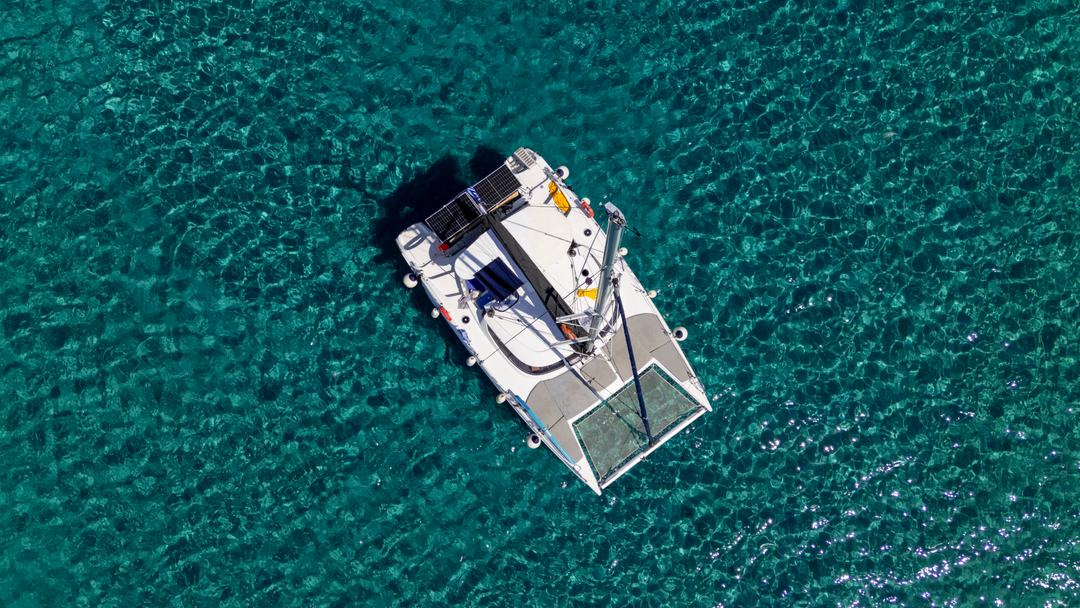
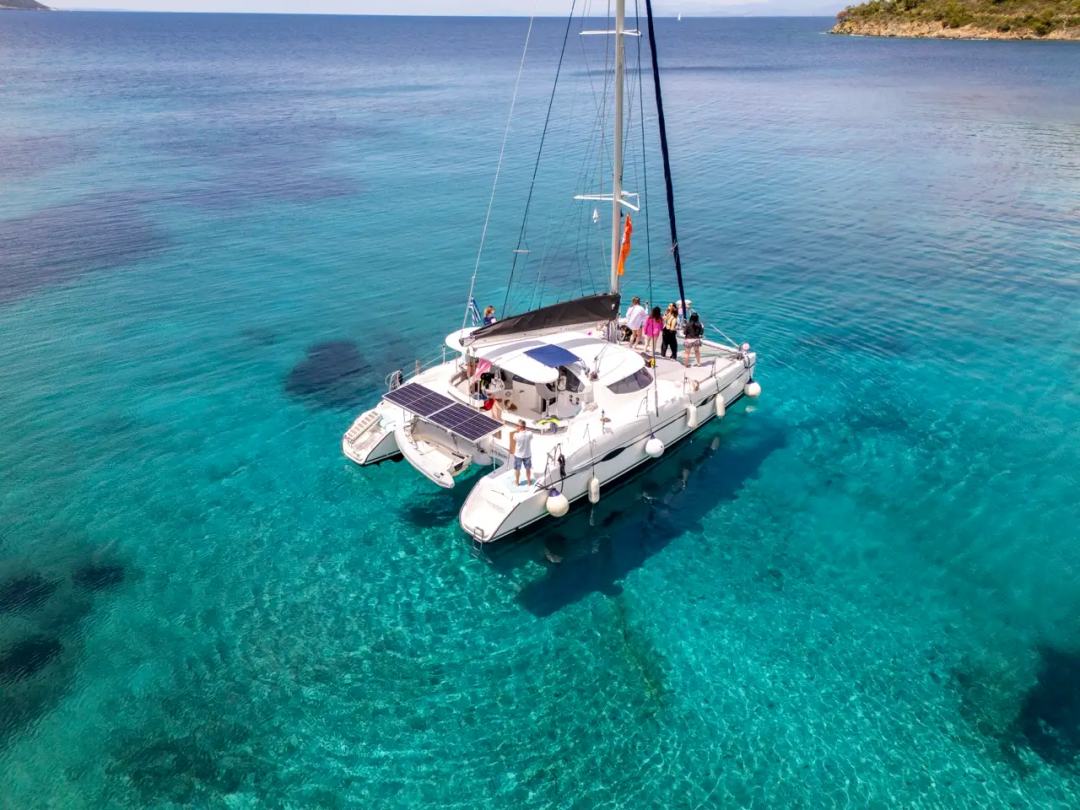
On our catamaran, the wide deck and stable platform mean the swim stops feel genuinely relaxed. The boat anchors in clear water, you drop the swim ladder, and the island’s coves are right there. For families with younger children in particular, having a familiar safe space to return to between swims makes a significant difference to how the day feels.
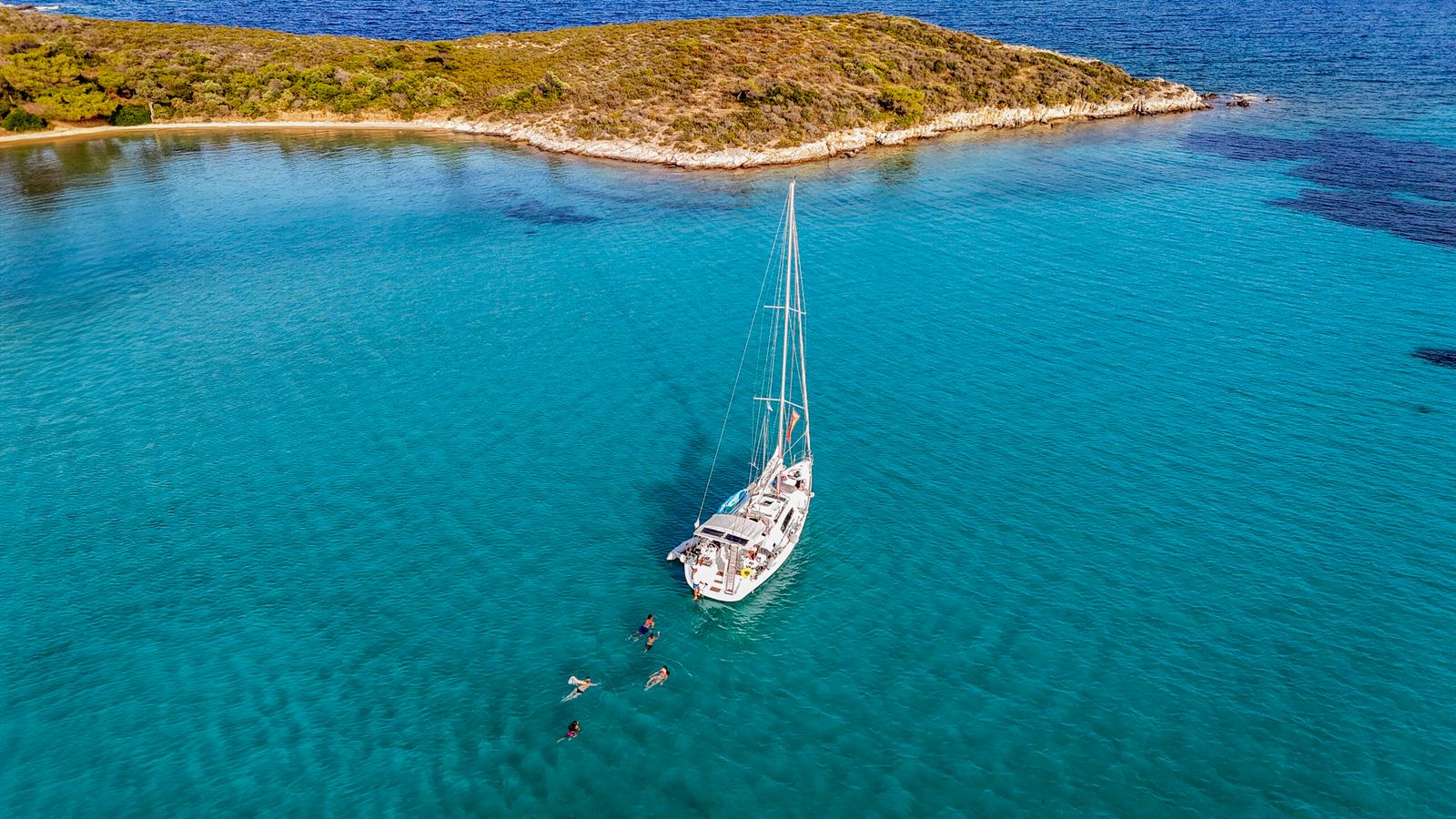
A sailing yacht gets you there with a bit more romance. There is something about arriving under sail that a motorized crossing simply does not replicate. The approach to the Vourvourou area from the open sea, with the islands appearing one by one as you close the coast, is one of those slow-reveal moments that stays with you.
Both vessels also mean you can combine Diaporos with other spots along the Sithonia coast in a single day, which a water taxi run absolutely cannot do. The Full Day Catamaran Cruise and the Full Day Sailing Cruise are both structured around giving you enough time at each stop to actually swim properly rather than dip and move on. Check those pages for current availability and what each trip covers.
What a Boat Trip to Diaporos Actually Looks Like
People often ask me what a day trip to the area is really like, as opposed to what the brochure version sounds like. Here is the honest version.
You will almost certainly share the anchorage with other boats. This is not a secret paradise with guaranteed solitude. It is one of the most popular sailing destinations in Halkidiki and everybody knows it. What a good skipper does is time the approach to avoid the worst of the midday crush at the most photographed spots, find a cove the tour buses cannot reach, and give you a swim in clear water away from the boat traffic. That is entirely achievable; it just requires knowing the water.
A full day on the water runs about seven hours. In that time, a well-run trip typically fits in two or three swim stops. Diaporos tends to be one of them because the water quality and the scenery are genuinely worth the stop. The Half Day Catamaran Cruise at around five hours also works well if a full day feels like too much, particularly in the heat of peak summer.
What you bring matters. Sun protection is non-negotiable: there is limited shade on both the beaches and the open water, and the Aegean sun is intense even on overcast days. Bring more water than you think you need, snorkelling gear if you have your own (though most boats carry basic kit), and footwear with grip for clambering on rocks.
Practical Tips Before You Go: Shade, Crowds and Timing
The single most useful piece of advice I can give anyone planning a trip to Diaporos is this: go early or go late in the season.
July and August are peak months and the channel fills up. The beaches that looked empty in the photographs you saw in March will have sun loungers, water taxis running back and forth, and boats anchored close together. It is still a great spot, but it is not a quiet one.
June and September are measurably less crowded. The sea is warm, the weather is reliable, and you can actually spread out on a beach. If your travel dates are flexible, September in particular is close to ideal.
If you are going in July or August, the timing of your boat trip matters. Mid-morning to early afternoon is when the lagoon is most congested. A trip that gets you there by nine or ten in the morning, or one that arrives in late afternoon as the day-trippers head back, will feel very different from a midday visit.
Shade is limited on most of the island’s beaches. There are some pine trees on the higher ground and near the tavernas, but the open sandy beaches get full sun for most of the day. A hat, a sarong, and a willingness to return to the boat’s deck when you need cover will serve you better than hoping for shade on the beach.
The tavernas on Diaporos are seasonal, open in summer and closed the rest of the year. They can be reached by the boats that anchor nearby. Do not assume they will have what you want or that they will be open on any given day. Carry your own food and water as backup.
Combining Diaporos with Other Sithonia Stops
One reason a full-day sailing or catamaran trip works so well for this area is that Sithonia has a run of excellent coastline and the islands and coves are relatively close together on the water. A day that includes Diaporos can reasonably also include one or two other stops without feeling rushed.
The Vourvourou archipelago itself has several small islets beyond Diaporos, each with its own character. Prasoudi has a small beach and shallow water. Agios Ioannis is rockier and less visited. These are places that a yacht can anchor near while a water taxi simply would not bother.
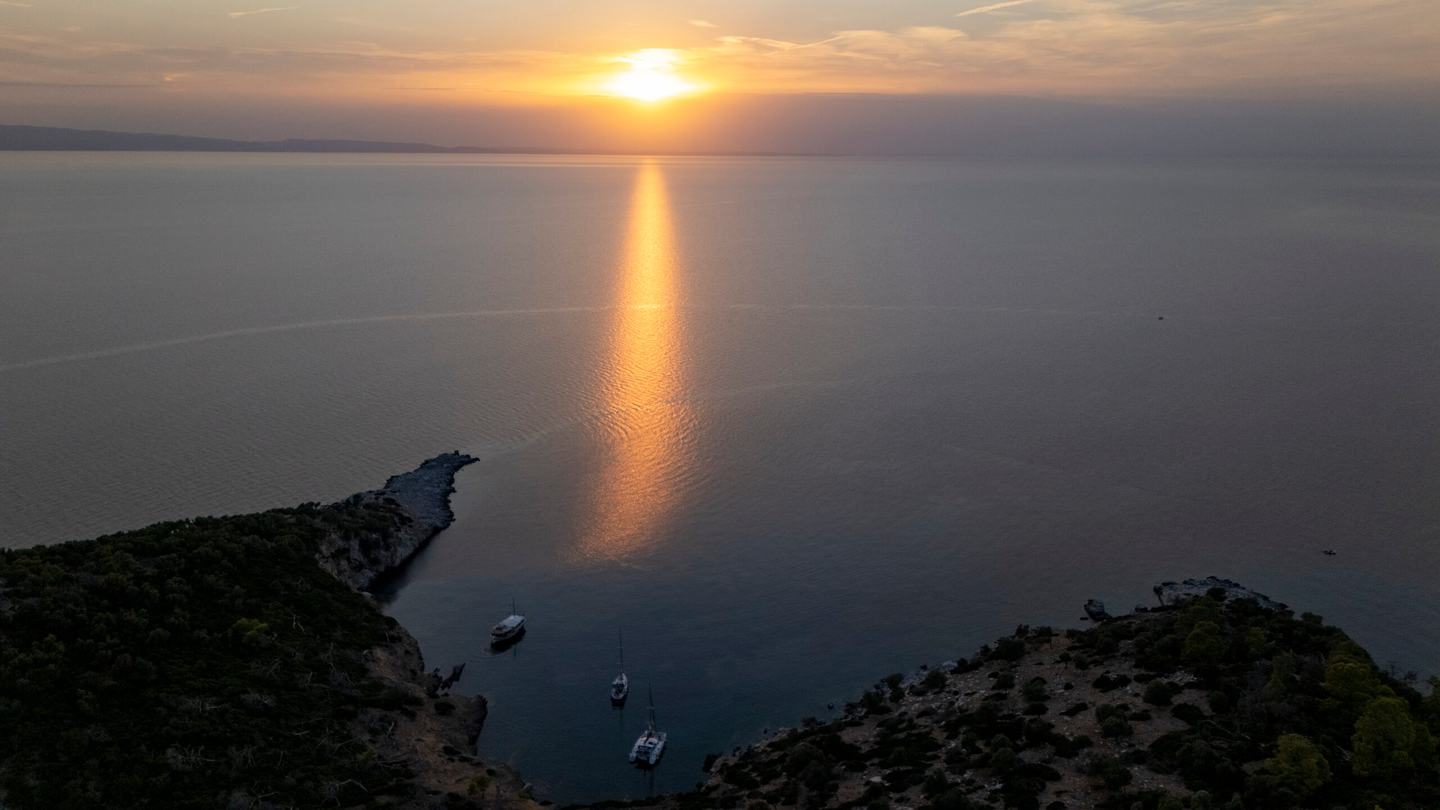
Further along the Sithonia coast there are coves accessible only by sea: places without road access, without beach bars, and without the infrastructure that brings crowds. A skilled skipper who knows the coast can string together a day that mixes the famous spots with a couple of quieter ones. Famous view plus genuine solitude, all in the same trip: that combination is what a good sailing day in Halkidiki actually delivers.
If you are already thinking about how to build this kind of day, the Full Day Sailing Cruise page has current dates and booking details. The Full Day Catamaran Cruise covers similar ground with the added stability and deck space of the catamaran, which some people strongly prefer for a long day out.
People Also Ask: Diaporos Island FAQ
How do I get to Diaporos Island?
The most common way is by water taxi from Vourvourou village, which sits on the mainland directly opposite the island. The crossing is very short. Alternatively, you can rent a small motorboat from one of the operators near Vourvourou, join an organized boat trip from Halkidiki, or book a private charter. There is no bridge, no ferry, and no way to walk there.
Is Halkidiki mainland Greece or an island?
Halkidiki is part of mainland Greece, not an island. It is a large three-pronged peninsula extending south into the Aegean, attached to the rest of northern Greece at its northern edge. The three peninsulas are called Kassandra, Sithonia, and Athos. Diaporos Island sits just off the coast of Sithonia and is a true island, but Halkidiki itself is firmly connected to the mainland.
What are the top 5 islands in Greece?
This depends entirely on what you are looking for. Santorini and Mykonos are the most internationally famous. Rhodes is the largest of the Dodecanese and has strong historical interest. Corfu in the Ionian draws visitors who want lush greenery alongside beach life. Crete is its own world. It is large enough to spend a week exploring and still miss things. Closer to the focus of this guide, Diaporos is not a populated tourist island in that mould; it is a small uninhabited island that you visit by boat for the beaches and water, not for nightlife or accommodation.
Are there any Greek islands to avoid?
Any island can disappoint if your expectations do not match reality. The heavily commercialized spots in the Cyclades can feel crowded and expensive in peak summer. My practical advice: match the island to what you actually want. If you want quiet swimming and clear water, small uninhabited islands like Diaporos accessed by boat will serve you better than any busy resort island in August. If you want nightlife, history, and restaurants, you need a different kind of destination entirely. Read carefully, ask specific questions, and ignore any article that promises you a crowd-free paradise in July without explaining how to actually achieve it.